Longer Service Windows
Preventive inspection routines for cables, face interfaces, lenses, and controller wear reduce avoidable replacement.
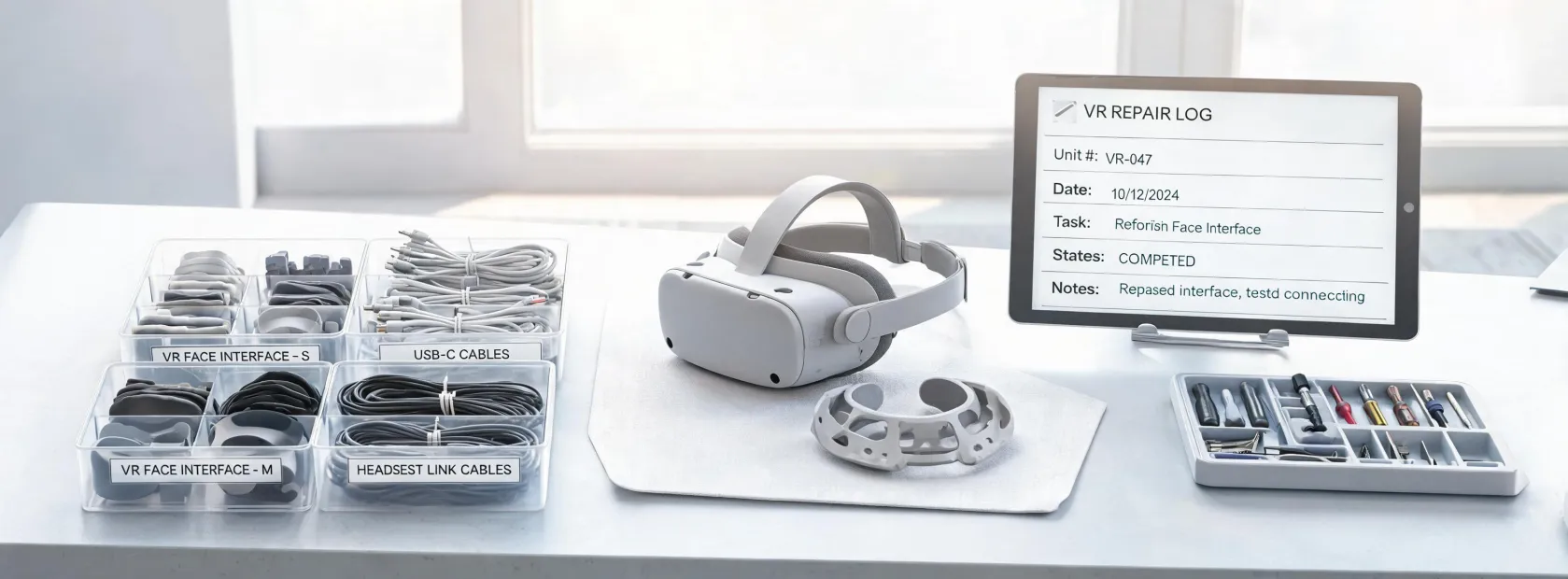
We design support plans for longer service life, clear spare-part paths, and responsible retirement of headset components when public venue use reaches its limit.
For VR hardware, sustainability is operational before it is promotional. A headset that is cleaned correctly, stored correctly, and repaired with the right part at the right time stays useful longer. A cable that is inspected before failure prevents emergency freight. A controller pool sized for weekend traffic reduces panic purchasing. Hp Reverb frames sustainability around lifecycle discipline: deployment notes, consumable inventory, repair triggers, packaging choices, and retirement records. The approach avoids broad carbon claims and focuses on practical decisions an operator can verify. When a device leaves service, the site team should know why it was removed, which components can be reused, and what documentation must follow the replacement.